
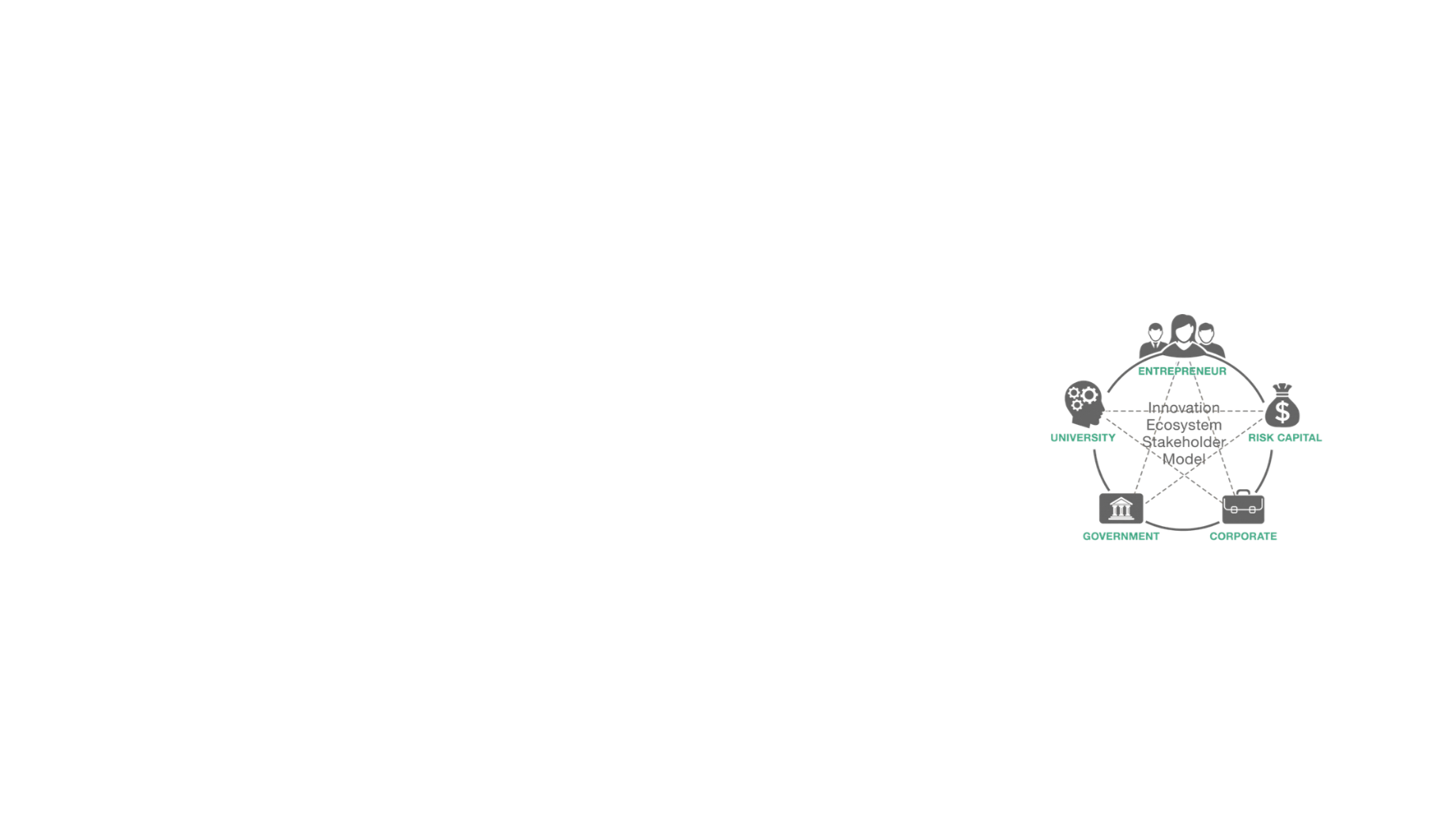
The 5 Stakeholders
By the MIT REAP ecosystem model
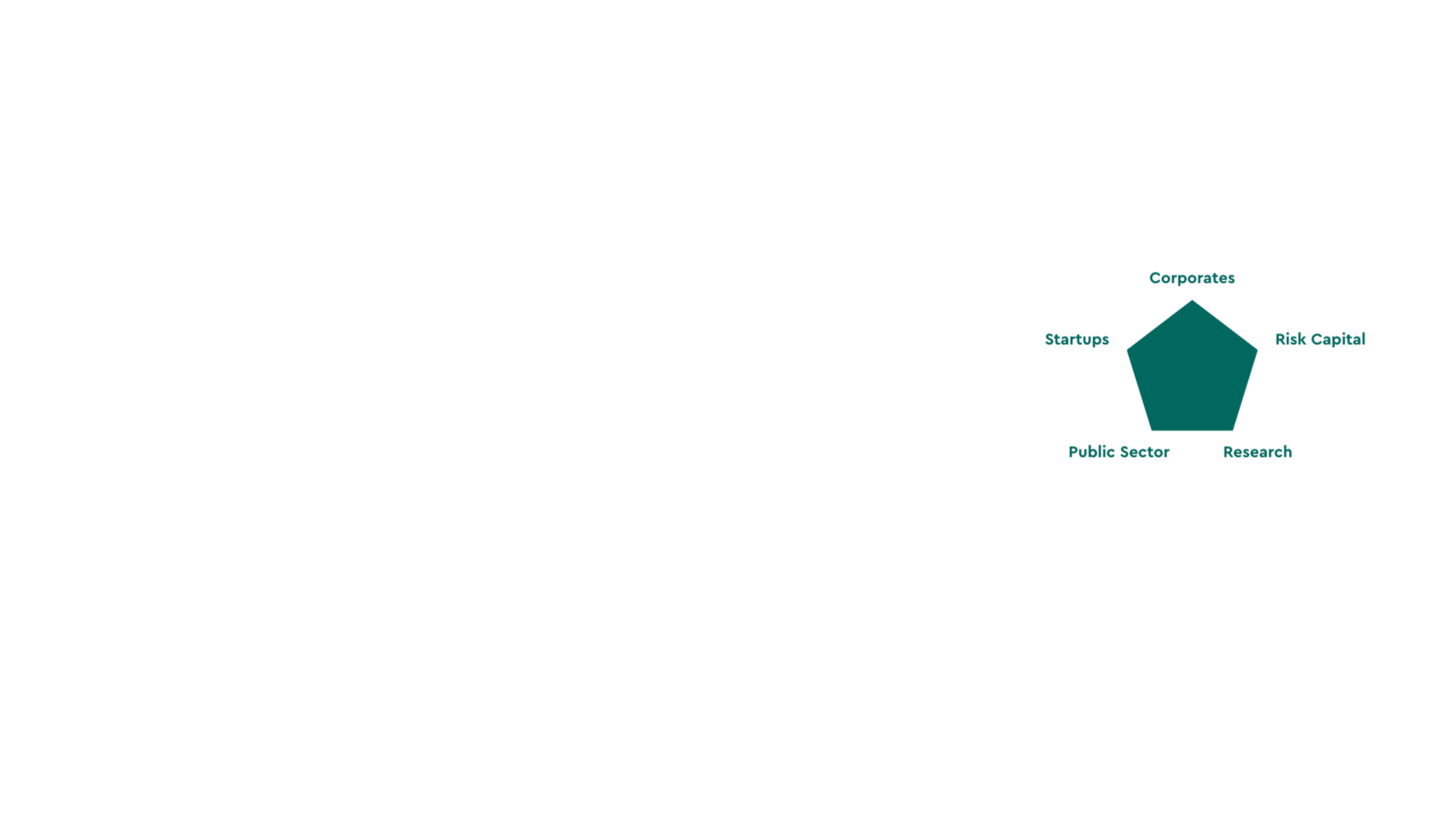
What is the MIT Reap ecosystem model ?
The MIT REAP (Regional Entrepreneurship Acceleration Program) model is built around a five-stakeholder ecosystem, represented as a pentagram: startups, corporates, research, public authorities and risk capital.
Innovation ecosystems only create real impact when these five actors work in alignment — connecting innovation, industrial deployment, policy and investment to generate scalable economic value.
MIT REAP also highlights the link between innovation capacity (I-Cap) and entrepreneurial capacity (E-Cap), ensuring research translates into real industrial impact.
Wallonia joined MIT REAP Cohort 8 and committed to developing two cleantech hubs by 2026, including District Cleantech.
The District Cleantech Ecosystem X the MIT Reap ecosystem
The District Cleantech ecosystem is structured around this model, adapted to the specific industrial and territorial realities.
Driving innovation
Startups bring new ideas, technologies and business models to life. They explore, test and challenge existing solutions, turning innovation into concrete projects that can be deployed and scaled within the District Cleantech ecosystem.
Benefits for Startups
Direct access to industrial partners and research centers
Hosting opportunities within District Cleantech infrastructures
Support for industrialization and testing (through dedicated platforms)
Connections to funding sources (venture capital, public funding, industrial partners)
National and international visibility
Access to regional and European collaborative projects
Scaling solutions into real-world impact
Corporates provide industrial expertise, infrastructure and market access. By working with startups and researchers, they enable pilot projects, industrial deployment and the large-scale adoption of cleantech solutions
Benefits for Corporates
Access to curated cleantech solutions and strategic tech scouting
Direct connections with startups and research centers
Transformation of strategic priorities into deployable industrial projects
Access to hosting opportunities within District Cleantech infrastructures
Support for industrial testing and industrialization through dedicated platforms
Guidance in navigating regulatory and public frameworks
Connections to funding sources (venture capital and public funding)
Integration into regional, European and international collaborative projects
Enhanced national and international visibility within the cleantech ecosystem
Creating the right framework
Public authorities help shape the regulatory, financial and territorial framework needed for innovation to thrive. They support ecosystem development through policy, public investment and long-term vision aligned with societal and environmental goals.
Benefits for the Public Sector
Integration of innovation into public procurement processes
Direct exposure to innovative cleantech solutions
Strengthened regional attractiveness (talent, skills, jobs, investment)
Insight into regulatory barriers through concrete industrial projects (SMEs, startups, corporates)
Participation in regional and European collaborative projects
From knowledge to application
Universities and research centers generate knowledge, technologies and talent. They play a key role in transforming research into applied solutions, supporting innovation, experimentation and long-term technological development.
Benefits for Research
A landing zone to experiment and position pilot projects
Access to and co-development of industrial testing infrastructures
Support in scaling technologies (TRL progression & industrialization)
Exposure to new cleantech solutions and industrial challenges
Participation in regional and European projects
Increased visibility for research and expertise within the ecosystem
Financing industrial scale
Risk capital enables cleantech startups and industrial projects to scale. By combining strategic investment, governance expertise and access to international networks, investors help move projects from pilot to deployment, strengthening the ecosystem’s industrial and territorial impact.
Benefits for Risk Capital
Access to qualified deal flow and investment opportunities in cleantech startups
Increased visibility for their portfolio companies
Direct connections between their startups and the District Cleantech industrial network